
The modern restaurant guest no longer views dietary accommodations as a polite favor; they view them as an absolute baseline of hospitality. What was once dismissed as a passing dietary fad has matured into a permanent, multi-generational shift in how society eats. For millions of diners, choosing gluten-free or vegan options is not a lifestyle preference—it is a medical necessity or a deeply held ethical conviction.
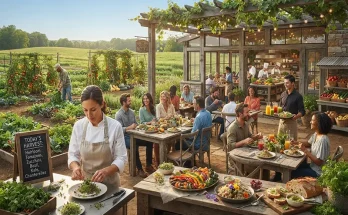
Yet, for decades, ordering gluten-free or vegan in a standard restaurant meant settling for an afterthought: a dry, pre-packaged bun, a sad side salad devoid of protein, or a bland, deconstructed plate. Today, a new wave of culinary operators is changing this narrative. By harnessing the power of the scratch kitchen, restaurants are proving that plant-based and gluten-free cooking can be craveable, luxurious, and profoundly satisfying—provided it is anchored by bulletproof safety protocols.
The Philosophy of the Scratch Kitchen: Crafting Plant-Based & Gluten-Free from the Ground Up
To understand why scratch kitchens are uniquely suited to conquer dietary restrictions, one must look at what happens in industrial food production. Mass-market and convenience-driven kitchens rely heavily on pre-made sauces, processed bases, and commercial additives. These convenience items are packed with hidden traps: wheat-based thickeners, soy fillers, dairy derivatives, and mysterious preservatives that spell disaster for allergic diners.
A scratch kitchen operates on absolute transparency. Because every stock, sauce, and dressing is built from raw ingredients on-site, the culinary team knows every single molecule entering the dish.
This total control unlocks immense culinary creativity. Chefs are moving beyond processed meat substitutes and heavy gluten-based doughs. Instead, they are building deep, complex umami in vegan dishes using roasted mushrooms, fermented miso, and rich nut-based emulsions. In gluten-free baking and preparation, they are mastering ancient grains like teff, sorghum, and amaranth, alongside natural binders like psyllium husk and flaxseed, to create crusts, pastas, and breads that rival their traditional gluten-laden counterparts.
Rigorous Allergy Safety Protocols: The Back-of-House Backbone
Delicious food means nothing if it is not safe. For guests with celiac disease or severe anaphylactic food allergies, dining out is an exercise in high-stakes trust. A single speck of flour or cross-contact with dairy can result in severe illness. Consequently, a scratch kitchen producing allergen-friendly menus must operate with surgical precision.
1. Spatial Segregation and Dedicated Prep Zones
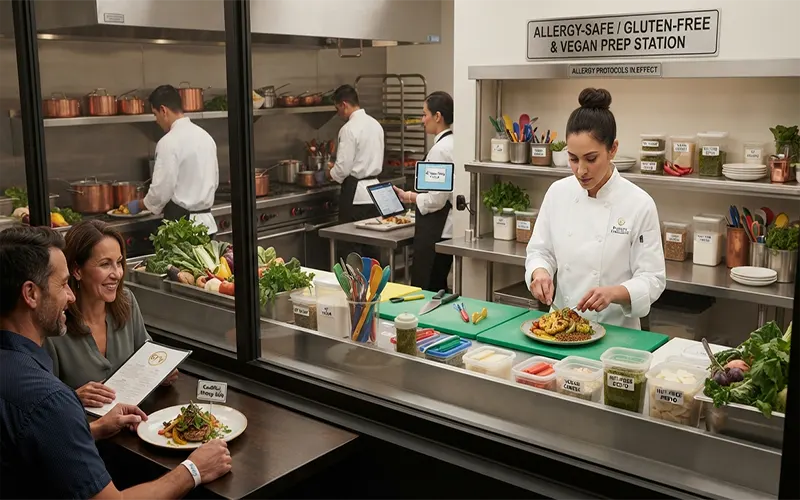
Preventing cross-contamination starts with kitchen architecture. Professional scratch kitchens handling gluten-free and vegan preparation implement strict spatial protocols. This often includes dedicated prep stations, separate mixers, and isolated fryers exclusively used for gluten-free items. Air circulation and flour dusting are carefully managed to prevent airborne wheat particles from settling on allergen-free surfaces.
2. Equipment, Color-Coding, and Storage
Every tool in the kitchen tells a story. Leading allergen-safe kitchens utilize color-coded cutting boards, knives, and pans (such as red for allergen-free) to ensure staff instantly recognize segregated equipment. Dry storage is organized with strict hierarchy: gluten-containing flours and grains are stored on lower shelves below sealed, dedicated containers of gluten-free alternatives to prevent spills and dust migration.
3. Front-of-House and Back-of-House Communication
Safety relies just as much on communication as it does on sanitation. The moment a guest indicates an allergy, the point-of-sale (POS) system flags the ticket with unmissable alerts. Kitchen display systems (KDS) isolate the order, and the expediter verbally confirms the allergy with the line cooks before a single pan hits the burner. Servers act as informed liaisons, able to speak fluently about ingredients and preparation methods without hesitation.
Menu Engineering and Guest Trust
Designing a menu that satisfies dietary restrictions without alienating omnivore diners requires a delicate balance of menu architecture.
The most successful scratch kitchens avoid “ghettoizing” their dietary options into a separate, pitifully small corner of the menu. Instead, they design inclusive menu architectures where naturally gluten-free and vegan dishes stand proudly alongside traditional items. A house-made corn masa empanada stuffed with spiced black beans, charred squash, and cashew crema appeals just as powerfully to a meat-lover as it does to a vegan with celiac disease.
Transparent labeling is equally crucial. Menus should utilize clear, unambiguous symbology (e.g., GF, V, VG) accompanied by brief, mouth-watering ingredient descriptions that build confidence. When a guest reads a description that highlights scratch-made integrity and transparent sourcing, their anxiety dissolves, replaced by excitement.
The intersection of scratch cooking, plant-based innovation, and rigorous allergy safety protocols represents the highest tier of modern culinary professionalism. Prioritizing gluten-free and vegan excellence is no longer just a functional accommodation—it is a powerful competitive differentiator.
Restaurants that master this balance prove that safety and soul are not mutually exclusive. By combining uncompromising kitchen safety with the artistry of scratch cooking, hospitality operators can welcome every single guest to the table with total confidence, proving that inclusive dining is the ultimate mark of culinary mastery.