

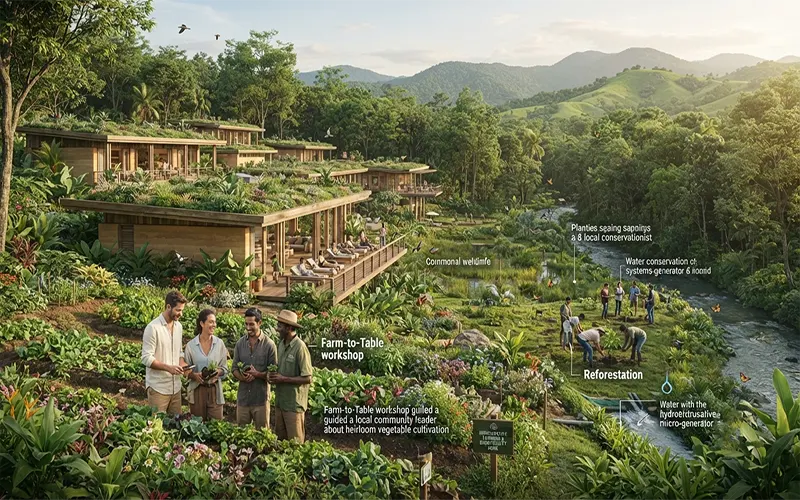
The global travel industry has reached a critical philosophical crossroads. For decades, the pinnacle of environmental consciousness in tourism was defined by passive sustainability—a pledge to “do no harm” through towel reuse programs, low-flow showerheads, and basic recycling bins. Today, that framework is no longer enough. As environmental pressures mount, visionary resorts, hotels, and eco-lodges are abandoning the baseline of sustainability in favor of something much bolder: regenerative hospitality.
Regenerative travel moves past minimizing environmental footprints to actively restoring ecosystems, revitalizing local economies, and leaving destinations measurably better than they were found. For conscious travelers and modern hospitality operators, this shift represents the new benchmark for luxury, purpose, and long-term viability.
Beyond Sustainability: Defining Regenerative Hospitality
To understand the regenerative movement, one must examine the fundamental math of hospitality. Traditional sustainability strives for a net-zero impact—an admirable goal, but one that assumes the surrounding environment is already in a healthy, balanced state. In a world facing climate disruption and habitat loss, net-zero is often simply slowing down the rate of decline.
Regeneration, by contrast, aims for a net-positive impact. It treats a hotel not as an isolated bubble built upon a landscape, but as a living organ within a broader ecological and social ecosystem. Regenerative hospitality integrates ecological health, biodiversity restoration, and community empowerment directly into the core business model. Every operational decision—from energy procurement and architecture to dining sourcing and staff recruitment—is evaluated through the lens of how it heals the land and uplifts the people who call it home.
Restoring Ecosystems: Biodiversity Initiatives on Property
True regenerative properties do not just protect their natural surroundings; they actively participate in ecological repair. Forward-thinking resorts are deploying sophisticated, science-backed biodiversity initiatives directly on their properties and surrounding acreage.
1. Habitat Rewilding and Flora Restoration
Hotels are increasingly transforming manicured, sterile lawns and water-guzzling golf courses into native rewilding zones. By reintroducing endemic flora, removing invasive species, and establishing protected wildlife corridors, properties create safe havens for local fauna. Landscape architecture is shifting toward biophilic design that bridges indoor and outdoor spaces while actively encouraging bird nesting, pollinator populations, and small mammal migration across hotel grounds.
2. Marine and Aquatic Regeneration
For coastal and island properties, ocean stewardship is a primary imperative. Leading resorts are investing heavily in marine conservation, partnering with marine biologists to spearhead coral reef restoration programs, establishing sea turtle nesting protections, and creating artificial reefs using sustainable, reef-safe materials. These initiatives not only rebuild damaged marine ecosystems but also educate guests, turning vacations into immersive educational experiences in conservation science.
3. On-Site Regenerative Agriculture
Food production is another major frontier for biodiversity. Properties are replacing imported goods with on-site, pesticide-free regenerative farms and permaculture gardens. These systems utilize no-till farming, cover cropping, and composting to rebuild depleted soils, sequester carbon, and foster underground fungal networks that support local plant and insect diversity.
Empowering Local Communities and Cultural Stewardship
Ecological restoration cannot succeed without human partnership. The socio-economic pillar of regenerative hospitality focuses on dismantling traditional extractive tourism models in favor of genuine community stewardship.
1. Beyond Token Hiring: True Economic Partnership
Historically, major resorts often imported management and outsourced labor while local communities bore the brunt of increased infrastructure strain and rising costs. Regenerative hospitality flips this dynamic. Leading properties prioritize local hiring at all levels, invest in continuous professional development and leadership training for indigenous staff, and utilize community profit-sharing models.
2. Hyper-Local Sourcing and Artisan Support
Economic regeneration thrives on circular local economies. Regenerative hotels source their ingredients from neighboring farmers, fishers, and cooperatives, while commissioning furniture, textiles, and art directly from regional artisans. This keeps tourism dollars circulating within the host community, preserving traditional craftsmanship and ensuring that local families share directly in the economic success of the property.
3. Cultural Preservation and Destination Governance
True stewardship honors cultural heritage. Regenerative operators collaborate closely with indigenous elders and local community leaders to guide how stories, traditions, and sacred landscapes are shared with visitors. Giving host communities an active voice in destination management ensures that tourism respects local boundaries, protects sacred sites, and maintains cultural dignity.
Eco-friendly regenerative hospitality trends mark a permanent, necessary evolution for the travel sector. By shifting the objective from merely sustaining a damaged planet to actively regenerating it, the industry is redefining what it means to travel well.
Regenerative hospitality proves that luxury and ecological healing are not mutually exclusive; they are deeply interdependent. As conscious travelers increasingly seek out purpose-driven adventures, the hotels and resorts that embrace biodiversity restoration and community empowerment will secure not only the loyalty of their guests, but the preservation of the very destinations we cherish.