
The global conversation surrounding plant-based dining has reached a critical maturity. For years, the commercial expansion of vegan food was heavily anchored by industrial processing—relying on high-tech meat analogs, heavily salted soy derivatives, and imported, out-of-season produce shipped across continents to maintain a uniform menu year-round. Today, a much deeper and more sustainable revolution is taking root in the culinary world. Driven by ecological urgency and a demand for uncompromised flavor, visionary chefs are returning to the soil through organic farm-to-table vegan restaurants that champion hyper-seasonal, locally sourced menus.
This movement represents the ultimate convergence of planetary health, culinary integrity, and ethical hospitality. By stripping away industrial middle-men and connecting the restaurant kitchen directly to regional organic agriculture, these establishments are redefining what it means to dine on plants.
The Soil-to-Plate Philosophy: Beyond Plant-Based Processing
To understand the power of farm-to-table veganism, one must examine the philosophy of the ingredient. Traditional plant-based cooking often sought to mimic animal proteins, attempting to recreate burgers, sausages, and cheeses using heavily processed isolates.
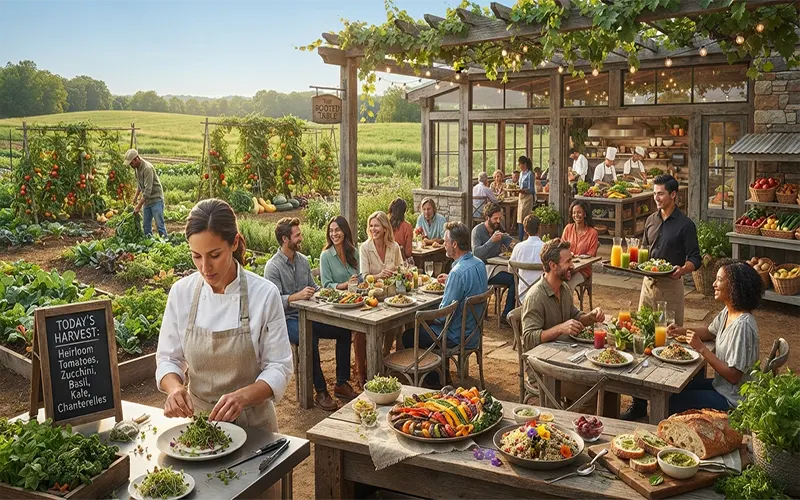
True farm-to-table vegan gastronomy rejects imitation in favor of celebration. It treats a heritage heirloom tomato, a freshly harvested root vegetable, or a wild-foraged mushroom not as a side dish, but as the luxurious, complex centerpiece of the plate. When vegetables are grown organically in living, mineral-rich soils and harvested at peak ripeness, they possess an inherent depth of flavor, natural sweetness, and textural complexity that requires very little masking or processing.
The Operational Mechanics of Hyper-Seasonal Menus
Operating a restaurant where the menu fluctuates weekly—or even daily—based on what is ripe in the fields requires an entirely different operational playbook than standard hospitality.
1. Direct Agricultural Partnerships and Co-Ops
Farm-to-table vegan kitchens do not rely on traditional broadline distributors. Instead, chefs work hand-in-hand with regional organic farmers, participating in crop planning seasons in advance. They establish direct co-ops and purchasing agreements that guarantee fair compensation for the farmer while ensuring a steady, diverse stream of heirloom produce for the kitchen.
2. Bridging the Gaps: Preservation as Culinary Art
Nature is not uniform, and seasonal harvests bring unpredictable gluts and shortages. To manage these natural fluctuations, scratch kitchens employ sophisticated preservation techniques. When summer heirloom tomatoes are overflowing, the kitchen ferments, dehydrates, confits, and pickling them to preserve their vibrant essence for the leaner autumn and winter months. This transforms seasonal limitations into an exciting culinary canvas.
3. Nutritional Density and Food Miles
Beyond flavor, the environmental and health benefits are profound. By sourcing locally, restaurants slash their carbon footprint by eliminating thousands of “food miles.” Furthermore, produce harvested locally and consumed within days retains significantly higher levels of vitamins, antioxidants, and living enzymes compared to industrial produce picked green and ripened in transit.
Guest Experience and Culinary Storytelling
In a farm-to-table vegan restaurant, the menu is more than a list of dishes; it is a narrative of the local landscape.
Menus frequently feature the specific names of neighboring farms, orchards, and foragers alongside each dish (e.g., wood-roasted heirloom squash with sage emulsion from Green Valley Organics). This radical transparency fosters a profound connection between the diner and the origin of their food. Modern consumers increasingly seek out authenticity, and they are enthusiastically willing to support establishments that practice genuine ecological stewardship and community reinvestment.
Organic farm-to-table vegan restaurants offering seasonal, locally sourced menus represent the gold standard of modern conscious gastronomy. By honoring the natural rhythms of the earth and rejecting industrial processing, these culinary operators prove that the most sustainable food is also the most vibrant and delicious.
As diners continue to seek out purpose and authenticity in their hospitality experiences, the soil-to-plate movement offers a powerful blueprint for the future—proving that when we nourish the local land, the plate takes care of the rest.