

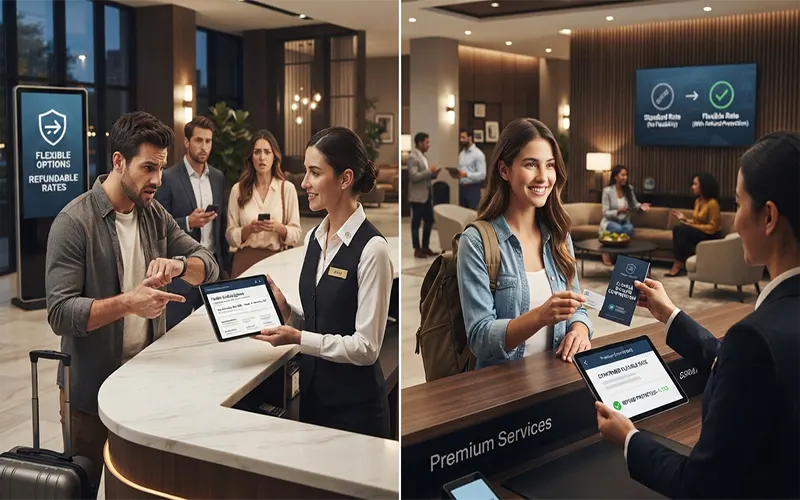
The global travel landscape has undergone a permanent psychological and operational transformation. For decades, the hospitality industry operated on a rigid, risk-loaded booking model: non-refundable rates locked guests into financial commitments months in advance, shifting all the operational and financial risk of unexpected life events, economic shifts, or travel disruptions squarely onto the consumer. Following years of widespread travel unpredictability, that legacy model has shattered.
Today, modern travelers view travel planning through a lens of risk management. Flexibility, transparent cancellation policies, and robust refund protection models are no longer viewed as pleasant perks or temporary promotional perks—they are the absolute baseline deciding factors that dictate brand loyalty and direct booking conversions.
The Evolution of Consumer Anxiety and Trust in Travel
To understand why flexibility is non-negotiable, one must examine the evolution of consumer trust. The psychological aftermath of sudden flight cancellations, shifting border restrictions, and unforeseen health or professional emergencies left a lasting mark on the global traveling public.
When consumers experienced firsthand the friction of fighting for refunds from rigid hotels and third-party booking sites during past disruptions, their booking behavior fundamentally changed. Modern travelers refuse to gamble their hard-earned money on unyielding cancellation clauses. Flexibility has become synonymous with peace of mind. For today’s consumer, a hotel that refuses to offer reasonable refund protection signals an outdated, extractive business model that does not value its guests.
The Business Case for Hoteliers: Balancing Risk and Revenue
For hotel operators and revenue managers, offering complete flexibility presents a genuine operational tightrope: how do you accommodate traveler demands for risk-free cancellations without destabilizing occupancy forecasts and bottom-line revenue?
1. Moving Beyond Binary Policies
Forward-thinking hotel brands are moving away from the simplistic, binary choice between a rigid “non-refundable discount” and a fully flexible “rack rate.” Instead, they are implementing dynamic cancellation tiers and embedded financial protection models.
2. Tech-Driven Refund Protection Partnerships
To protect hotel revenue while satisfying the guest, many brands are partnering with specialized travel-tech insurtech platforms. These integrations allow guests to add a low-cost, “Cancel-For-Any-Reason” (CFAR) refund protection model at checkout. The hotel retains its revenue or secures a non-refundable booking via the insurance underwriting, while the guest enjoys 100% financial peace of mind. It is a win-win structure that bridges the gap between operational stability and consumer freedom.
Direct Bookings vs. OTAs: The Battle for Flexible Control
Flexibility has also become the ultimate battleground in the ongoing war between hotel brand websites and third-party Online Travel Agencies (OTAs).
During periods of disruption, travelers learned that modifying or refunding a reservation booked through a complex intermediary often resulted in endless customer service loops and lost vouchers. Major hotel brands are weaponizing this pain point by offering superior, frictionless flexible booking terms exclusively through their direct channels.
By guaranteeing instant digital refunds, automated credit rollovers, and transparent modification policies for direct bookers, hotels build immense brand equity. Guests quickly realize that booking direct provides not just the best rate, but the highest level of structural protection if plans change.
The surging demand for flexible booking options and refund protection models marks a permanent maturation of the hospitality sector. Travelers navigating an uncertain world rightfully expect the travel industry to partner with them, not penalize them, when plans inevitably shift.
Hotels that cling to punitive, rigid cancellation policies risk alienating a risk-conscious consumer base. Conversely, brands that embrace transparent, traveler-first flexibility and innovative refund protection models will secure the most valuable currency in modern hospitality: unbreakable consumer trust and enduring brand loyalty.