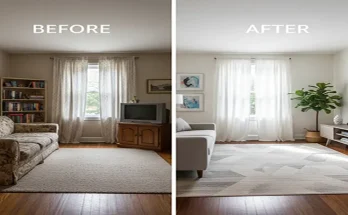


In a competitive, seller’s market, finding a genuinely undervalued property—a “diamond in the rough”—requires shifting your strategy from simply scrolling public listings to becoming a proactive, data-driven, and well-connected hunter. Undervalued properties are rarely cheap; they are assets priced below their true potential value.
Here is a comprehensive guide to identifying and securing these hidden opportunities.
1. The Proactive Search: Hunting Off-Market Deals
The best deals rarely hit the Multiple Listing Service (MLS) or public sites like Zillow or Redfin because the competition is too fierce. Undervalued properties are primarily found off-market.
- Build a Hyper-Local Agent Network
- Be a Ready Buyer: Agents prioritize buyers who are serious, pre-approved, and ready to close with minimal contingencies. Send your loan pre-approval letter to agents to show you are a serious prospect, not a time-waster.
- Specify Your “Buy Box”: Clearly communicate your precise criteria (e.g., “3-bed, 2-bath, needs cosmetic work, $400k-$450k in the X and Y neighborhoods”). Agents will think of you immediately when a private listing (called a “pocket listing”) pops up.
- Nurture Relationships: Call and check in with the top local selling agents in your target area every few weeks. They often have an exclusive list of buyers they contact before a property is publicly advertised.
- Direct-to-Seller Outreach
- “Driving for Dollars”: Physically drive or walk through your target neighborhoods looking for signs of distress (e.g., overgrown yards, deferred maintenance, or bulk trash piled up). These properties often signal a motivated seller who needs to offload the asset quickly.
- Direct Mail Campaigns: Send targeted, handwritten, or highly personalized letters to owners of properties that match your investment criteria, such as absentee owners (landlords) or older owners in high-equity neighborhoods. This bypasses the agent and speaks directly to a seller who may prefer a quiet, fast sale.
- Target Motivated Sellers
Undervaluation is often driven by seller urgency rather than the property’s condition.Search for public records that indicate a high-stress situation:
- Pre-Foreclosures/Distressed Sales: Properties with a Notice of Default or Notice of Trustee Sale.
- Estate Sales/Probate: Properties being sold by an executor who is primarily focused on liquidating the asset for the estate, often leading to a desire for a fast closing.
- Divorce/Relocation: These sellers prioritize speed and certainty over maximizing the final sale price.
2. The Data-Driven Approach: Spotting Mispricing
In a competitive market, you must use data to identify anomalies that the average retail buyer overlooks.
- Analyze Price Per Square Foot (PPSF)
PPSF is one of the most reliable metrics for spotting mispricing.
- Calculate the Average PPSF: Find the average PPSF for properties that have closed (not just listed) in the last 60-90 days in your target neighborhood.
- Identify the Anomaly: Search for properties listed significantly below that neighborhood average. If a house is listed at a much lower PPSF, it is a strong indication that it is undervalued or requires major renovation. Your next step is to determine which it is.
- Focus on Transitional Neighborhoods
Don’t chase the hottest zip codes, as those prices are already maxed out. Instead, look for areas one or two streets away from the “hot spot.” These are transitional neighborhoods.
- Look for Infrastructure Changes: New public transit lines, road expansions, or new school construction often signal future demand before property prices have caught up.
- Identify Commercial Growth: The opening of trendy new coffee shops, local breweries, or anchor retail stores often precedes a major residential price spike. Your purchase price today reflects the neighborhood of yesterday.
- Target Stale Listings & Price Reductions
When a property has been on the market for significantly longer than the neighborhood’s Average Days on Market (ADOM), the seller is growing impatient.
- A seller who has dropped their price once is likely open to a second, more aggressive negotiation.
- Properties that were “Pending” and then came back on the market (“Fall-Outs”) are excellent targets, as the seller and listing agent are usually exhausted and motivated to close quickly.
3. The Investor Mindset: Looking Beyond Cosmetics
Most buyers are looking for a move-in-ready, beautifully staged home. This is your competitive advantage.
- Look Past Cosmetic Flaws
Many properties are undervalued because of easily fixable surface issues that scare away retail buyers, such as:
- Ugly paint colors or outdated wallpaper.
- Worn carpet or old linoleum floors.
- Bad listing photos or poor home staging.
A smart investor ignores these flaws and focuses on the expensive-to-fix fundamentals: Foundation, Roof, HVAC, and Location. If the “bones” are good, the property is a prime candidate for a Value-Add Strategy.
- Master the After-Repair Value (ARV) Calculation
The true measure of an undervalued property is its potential After-Repair Value (ARV). You must be able to calculate this number instantly.
$$\text{ARV} = \text{Value of Comparable Renovated Homes in Area}$$
$$\text{Maximum Offer Price} \le \text{ARV} – (\text{Renovation Costs} + \text{Holding Costs} + \text{Target Profit})$$
You use the Maximum Offer Price as a hard cap. If the property’s price is below this, it’s a good deal. If it’s above, walk away.
- Decode Listing Language
Be a detective for subtle language used by frustrated agents in property descriptions:
- “Priced to sell quickly,” “Bring all offers,” or “Motivated Seller” are direct invitations to negotiate.
- “TLC needed,” “Investor special,” or “Needs a little love” indicate the seller is acknowledging a low price and condition.